
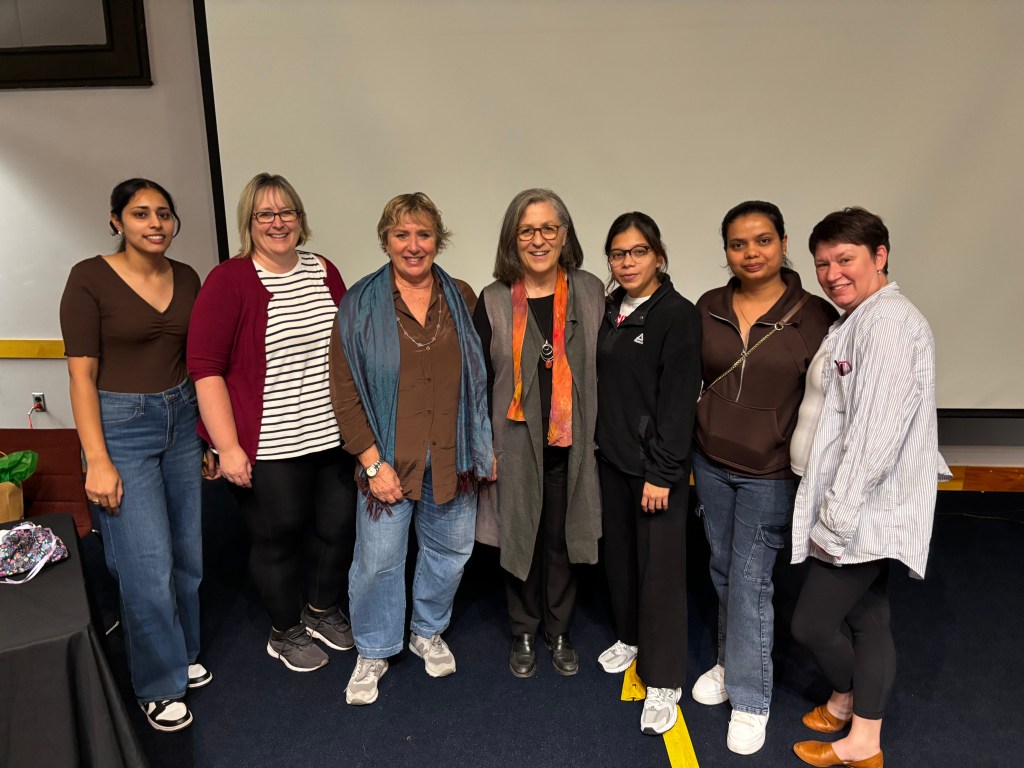
By Veronica Moore, Gurleen Kaur, Nikky Patel, Chio Mendoza and Jenn Armstrong
“Every experience continues to connect children’s curiosity to their learning.”
Recently, our team had the opportunity to travel and deepen our understanding of the Reggio Emilia approach — a philosophy that continues to inspire our work with children every day.
Traditional educational methods often created a power imbalance, where the adult held all the authority and the children had little or no voice. In the Reggio Emilia approach, by respecting children as co-learners and collaborators, this power dynamic shifts — creating equilibrium and mutual respect within the learning relationship.
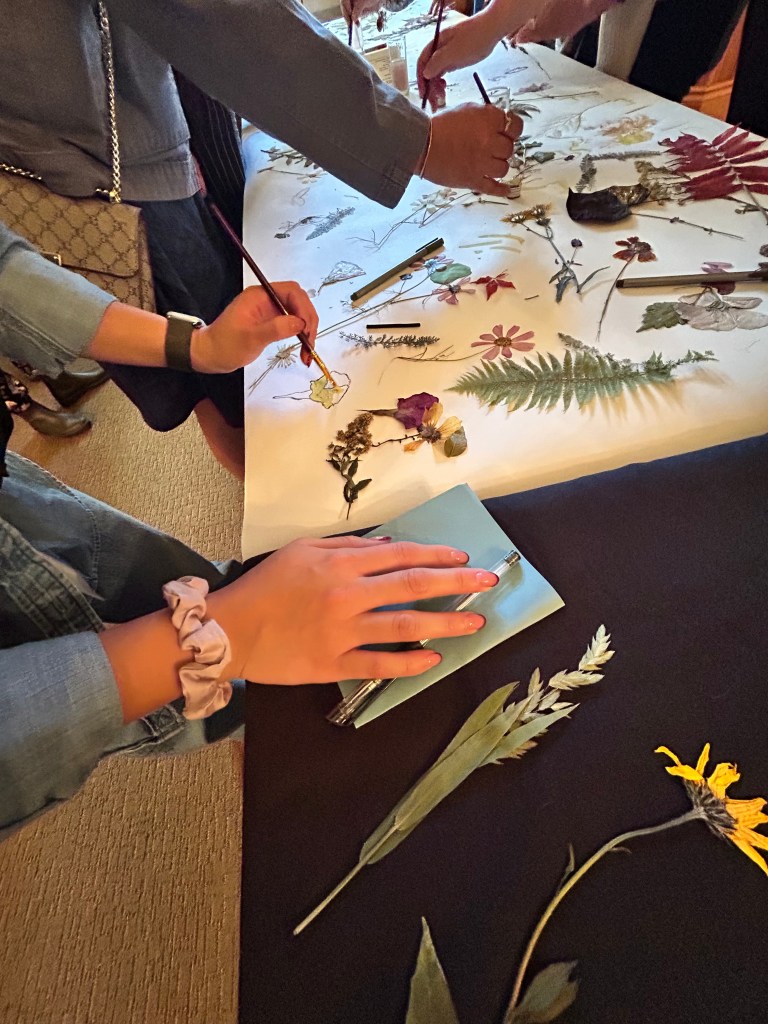
“The simplest moment of using non-structured materials can unfold endless possibilities”
Reggio children grow up seeing themselves as capable and creative thinkers. They approach challenges with curiosity, and they understand the value of collaboration, listening, and empathy.
They also tend to have a lasting connection to the world around them. Growing up in a setting that values nature, community, and real-life experiences helps them see learning as part of everyday life — not something that only happens in a classroom.
Ultimately, children raised with the Reggio philosophy grow into adults who are thoughtful, open-minded, and confident in their ability to make meaning of the world.
At the beginning of our learning journey, we had the privilege of hearing from pedagogista Tiziana Filippini and atelierista Loretta Bertani, who guided us in examining pedagogy through dialogue and reflection on the experiences and documentation from the Infant–Toddler Centres and Preschools of Reggio Emilia, Italy. Their insights reminded us that education is a living process — one built through relationships, curiosity, and shared meaning.
Our collective reflection truly resonates with the idea of redefining the teacher’s role. As educators, we are not the ones holding all the answers — instead, our role is to connect the threads of conversation among the children. By valuing these connections — the exchange of knowledge, ideas, and perspectives — we nurture collaboration and mutual respect. These ways of being together extend far beyond the classroom, shaping how children engage with the world and with others throughout their lives.
This reflection continues to guide our work with children every day
Why We Went
We wanted to gain a richer understanding of the Reggio Emilia philosophy and its image of the child — as capable, curious, and full of potential. Our goal was to learn new ways to support children’s learning and to design environments that reflect their interests, ideas, and experiences.
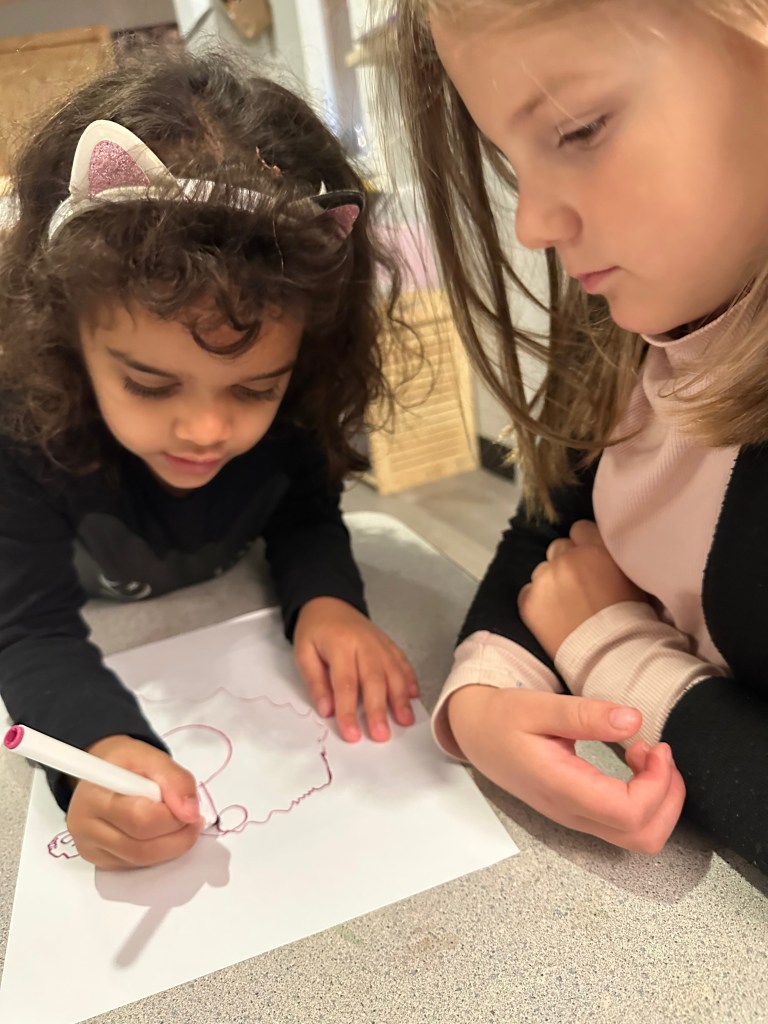
We explored the role of the atelierista — the educator who supports children’s artistic and creative expression — and how the atelier connects to joy, imagination, and the concept of allegro, or lightness. We also looked for ways to make the “hundred languages” visible for infants and young children — celebrating the many ways they express themselves through movement, drawing, storytelling, and play.
Finally, we wanted to find strategies to guide and support our teaching team through this ongoing journey of reflection and collaboration.
⸻
What We Learned
Throughout this experience, we learned the importance of embracing non-structured moments and following children’s lead. We saw once again that children are capable, curious, and co-constructors of their own knowledge — they learn best through exploration and discovery.
We were reminded that documentation is a powerful tool for everyone — educators, children, and families — because it makes learning visible and helps us reflect together. We saw how simple moments can lead to meaningful experiences, and how true learning happens in relationships. Collaboration and deeply listening to children are at the heart of this process.
We also reflected on the beauty of diversity in nature, relationships, and perspectives and how the environment serves as the third teacher, inspiring creativity, curiosity, and inquiry. Being flexible and integrating real-life experiences enrich learning in authentic ways.
As educators, we see ourselves as co-learners and co-researchers walking alongside children. We were inspired to continue honoring the “hundred languages” — the many ways children express and make sense of their world — and to recognize how unstructured, informal moments often lead to endless possibilities.
We also explored how language forms the foundation of Reggio-inspired learning, and how important it is to gather each morning as a community — sharing, connecting, and beginning the day with intention and joy.
⸻
Co-Existing
Co-existing means more than simply being together in the same space. It is about valuing our differences, learning from one another, and working together to create fairness and understanding. Within our school community, this means building a culture where everyone feels seen, heard, and supported.
When we truly embrace diversity, we prepare ourselves — and the children — to face the challenges of the future with empathy, creativity, and kindness.
⸻
Conclusion
This journey reaffirmed our belief that meaningful learning happens together — through relationships, curiosity, and shared trust. When we slow down, observe, and listen to children, we discover their many ways of thinking, expressing, and connecting with the world.
The Reggio Emilia approach is more than a teaching philosophy; it’s a mindset that celebrates collaboration, reflection, and the beauty of discovery. As a team of educators, we walk alongside children — building a community where creativity, inquiry, and respect guide our practice every day.
Together, we can inspire endless possibilities.



 allegrochildcare.ca